
Finding belonging and helping others do the same
News
- EDI,
- Professional Performance
18 June 2026
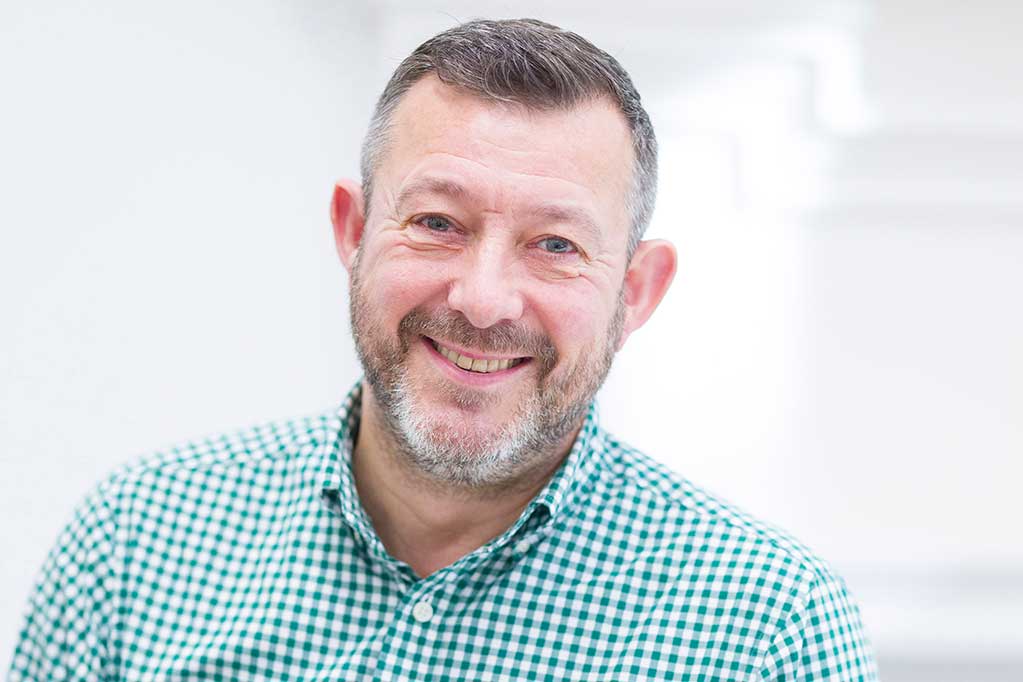
In 2021, IWFM made a public commitment to driving forward equity, diversity and inclusion – a commitment that is now formally included in our governance. It’s a commitment that we are proud to restate this Pride Month, because we know that facilities management has enormous power to create positive change, making a real impact in real lives.
Colin Kimber MIWFM is Culture & Engagement Director at Pareto FM. Here, he shares his story of the massive difference a truly inclusive professional community can make to the lives of LGBTQIA+ people, both in their experience at work, and their journey through life.
When people talk about coming out, they often describe a defining moment where they told the world who they were. My experience was different. I never really had a single coming out moment. Instead, for much of my life, whether I was “out” depended on the environment I was in, the people around me and whether I felt safe enough to be myself.
Growing up, I was heavily influenced by fear. Being bullied as a child, never quite feeling like I fitted in, and having both peers and adults make it clear that I was different taught me to be cautious. I became very concerned about how others viewed me and, over time, I learned to hide the parts of myself that I thought might make me vulnerable.
As I progressed into adulthood and my career, that mindset followed me. I wanted to be taken seriously and succeed, so I often kept my personal life separate from my professional one. Looking back, I can see that I spent a lot of energy assessing situations, deciding what was safe to share and what was not.
One of the things that struck me when I first entered the Facilities Management profession was that, for the first time, I found myself working alongside a number of other LGBTQ+ people. It was a small thing, but it had a significant impact. I started to relax. I began making genuine friendships at work. I saw people who were successful, respected and openly themselves. It helped me realise that perhaps I did not need to keep every part of my life separate.
My journey was not a straight line, however. When I moved into another organisation, the culture felt very different. It was a more traditionally male and heterosexual environment and, without consciously deciding to, I found myself retreating again. I became selective about who knew I was gay and only shared that part of myself with people I felt I could trust.
Over time I became braver, but I never felt fully supported by the organisation or its senior leadership. At times I felt more like a novelty than a valued contributor. Looking back, one of the lessons I learned is that representation alone is not enough. Inclusion is not simply about being present; it is about feeling that you belong, that you are trusted and that opportunities genuinely translate into growth and progression.
Things changed dramatically when I joined Pareto. For the first time in my career, I found myself in an environment that was genuinely inclusive and supportive. In truth, I found that challenging at first. My default setting had become one of caution. I was used to assessing the environment before deciding how much of myself to reveal.
Instead, I was encouraged to be my whole self and see where that took me.
What surprised me was the impact it had on my work. The energy I had previously spent managing perceptions could instead be invested in building relationships, solving problems and helping people. It freed me to become fully engaged in the work I was doing and the relationships I was building both within Pareto and with our customers. Feedback I have received over the years suggests that it also allowed my authenticity to come through, making it easier for people to connect with me.
Not long after joining Pareto, I came across an article about LGBT+ in FM. Networking had never come naturally to me, so I thought it might be easier if I started within my own community. I attended a meeting and never really looked back.
What I found was more than a network. I found a community.
I also realised that I could become for other people what had been missing for me during much of my own journey. Looking back, what was missing was not necessarily a programme, a mentor or a specific opportunity. It was someone who understood how fear and isolation can shape the way we move through the world. The solitude I experienced meant that I often placed restrictions on myself that nobody else was imposing. If I could help someone else challenge those assumptions sooner than I did, then that felt worthwhile.
Some of the moments I am most proud of have happened away from conference stages, committee meetings or industry awards. One was a young professional who felt completely alone within their organisation and reached out for support. We spoke several times and they have since gone on to build a successful career and now hold a leadership position where they are making a difference for others.
Another was someone who approached me because they had begun experiencing feelings for members of the same sex and needed a safe space to talk. They were not ready to have those conversations with friends or family and simply wanted somewhere they could explore what those feelings meant without judgement.
Those experiences remind me why visibility matters. Sometimes people do not need answers. They simply need to know they are not alone.
As we celebrate Pride Month, I find myself feeling optimistic about the future. Facilities Management has incredible reach. We are present in almost every workplace and every sector. If we continue to unite around inclusion, curiosity and psychological safety, we have an opportunity to create workplace experiences where everyone can belong and thrive.
For LGBTQIA+ people, that means a future where fewer people spend years questioning whether they can be successful while being themselves. My hope is that the next generation enters our profession and sees visible role models, supportive communities and leaders who value difference as a strength.
If my story demonstrates anything, I hope it is this: you do not have to choose between being yourself and being successful. In fact, for me, the moment I stopped trying to separate those two things was the moment I truly began to flourish.